

What should a privacy-focused wallet do when the hardest part is not storing coins, but understanding which networks and features are still dependable? That question sits behind discussions of Cake Wallet, Haven Protocol, and Monero. A single interface can make several assets feel interchangeable, yet the underlying systems may have very different privacy models, liquidity conditions, development histories, and recovery risks.
Cake Wallet is best understood as a self-custody mobile wallet designed around privacy-oriented use, with Monero at the center and support for additional assets depending on the current release and platform. Haven Protocol is a separate cryptocurrency project, not simply another name for Monero. The practical lesson is important: a wallet interface does not make every supported asset equally private, liquid, or operationally safe. Users should evaluate the network as carefully as the application.
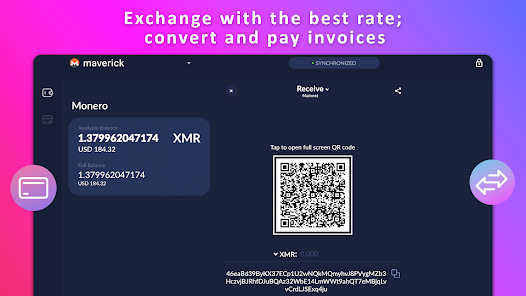
Why Monero changes the wallet question
For Bitcoin, a wallet primarily manages private keys and constructs transactions on a transparent ledger. Addresses, amounts, and transaction history can often be inspected publicly, even though an address is not automatically a legal identity. Monero uses a different architecture. Its transaction design obscures the sender, recipient, and amount through mechanisms including stealth addresses, ring-based input selection, and confidential amounts. The result is not perfect invisibility, but a substantially different default privacy model.
That distinction changes what “secure wallet” means. In a Monero wallet, the recovery phrase remains crucial, but so are synchronization, fee estimation, network connectivity, and the handling of view-related information. A view key can allow a party to inspect incoming transactions without giving that party full spending authority. This can be useful for accounting or selective disclosure, but it also shows why privacy is not a single switch. A user may protect spending keys while still revealing information through screenshots, exchange records, device compromise, or careless payment practices.
Cake Wallet’s appeal follows from this combination of self-custody and convenience. A user can manage a Monero wallet without maintaining a full node on a phone, and a multi-currency interface can reduce the need to move between separate applications. For someone in the United States who uses crypto for both ordinary payments and long-term holding, that convenience is meaningful. It can also become a liability if the user assumes that every coin in the application inherits Monero’s privacy properties.
It does not. Bitcoin transactions remain traceable on Bitcoin’s public ledger. Other assets may use different address formats, account models, or privacy assumptions. The sharper mental model is this: Cake Wallet is a tool layer, while each blockchain supplies the privacy and settlement layer. The tool can make access simpler; it cannot rewrite the rules of the network being used.
Where Haven Protocol fits—and where it does not
Haven Protocol was developed as a separate privacy-oriented ecosystem associated with XHV and synthetic assets intended to represent forms of value within its network. That design introduced a more ambitious question than “How can a transaction be private?” It asked whether users could create private representations of assets such as currencies or commodities while using a privacy-focused base network.
Conceptually, Haven and Monero share an interest in transaction privacy, but they are not interchangeable. Monero is primarily a digital cash system with a focused monetary design. Haven attempted to extend a privacy foundation into an asset-creation and value-storage system. Those extra functions create additional dependencies: pricing inputs, conversion logic, network incentives, liquidity, and confidence that the system’s economic mechanisms will behave under stress.
This is the non-obvious trade-off. Adding features to a privacy network can make it more useful, but it also expands the number of things that must work correctly. A wallet may display XHV or related assets in a familiar way, yet the user still bears the risks of the underlying protocol, including market liquidity and the continued availability of reliable network infrastructure. Historical support for an asset should not be treated as proof of current support. Before moving funds, check the wallet’s present asset list, the relevant network status, and whether deposits and withdrawals are actually functioning.
There is no recent project-specific news available for the current or latest eligible week to justify a fresh claim about Haven development. That absence is itself a reason to avoid confident assumptions. In a fast-changing crypto environment, a quiet news cycle does not establish that a network is healthy, abandoned, or safe. It simply means the user should rely on current, verifiable wallet and network information rather than old screenshots, cached guides, or community memory.
Comparing practical wallet choices
A privacy-first user usually has at least three broad approaches. The first is a multi-currency mobile wallet such as Cake Wallet. Its strength is accessibility: one application can make routine management of Monero and selected additional assets easier. Its weakness is concentration of risk. A compromised phone, fraudulent installation, exposed backup, or mistaken transaction can affect several holdings at once. Mobile convenience also means accepting the security limits of a general-purpose device.
The second approach is the official Monero desktop wallet or another Monero-focused desktop implementation. This tends to offer deeper control over synchronization and node selection, and it may be preferable to users who want to verify more of the transaction process themselves. The cost is complexity. A desktop wallet may require more storage, patience, and technical understanding. It is not automatically safer simply because it has more settings; poor key management can defeat a technically sophisticated setup.
The third approach is a hardware wallet used where compatible support exists. Hardware devices can keep signing keys isolated from many ordinary malware attacks, which is valuable for larger balances or infrequent transactions. They do not make a transparent blockchain private, and they introduce their own risks: supply-chain concerns, recovery-phrase exposure, compatibility limitations, and the possibility that a user approves a transaction without understanding its destination. Hardware security protects a key; it does not validate a recipient or repair a flawed privacy model.
Custodial services are a fourth, less privacy-preserving option. They may offer simple recovery and familiar interfaces, but the user does not control the private keys in the same way. The service can link activity to identity documents, account records, IP information, and withdrawal patterns. For US users, this may also intersect with tax reporting and compliance obligations. Privacy tools can reduce unnecessary public exposure, but they do not erase legal duties or make a transaction permanently untraceable in every context.
A decision framework for safer use
Instead of asking which wallet is “the most secure,” ask secure against what. If the concern is phone theft, an encrypted device, a strong unlock code, and a carefully protected backup matter. If the concern is blockchain surveillance, the selected asset and payment habits matter more than the wallet’s color scheme. If the concern is losing access, recovery procedures and a tested backup matter. Security is a relationship between a threat, a user behavior, and a technical control.
For a new Monero user, a sensible process is deliberately unglamorous. Install software only from a source you have independently verified; inspect the app name and publisher rather than trusting an advertisement; create a new wallet; write the recovery phrase offline; and test restoration before committing a significant balance. The cake wallet download information may help a reader locate the application, but no link should replace verification of authenticity and current release details.
Send a small test transaction first, especially when using an unfamiliar asset or network. Confirm the destination, network, and expected arrival behavior. For Monero, allow time for synchronization and confirmation rather than treating a delayed balance as proof of failure. For Bitcoin and other transparent assets, remember that transaction identifiers can expose a durable public record. Separating spending funds from savings can also limit the consequences of a compromised everyday device.
The most useful forward-looking signal is not a marketing promise but operational evidence. Watch whether a project maintains functioning infrastructure, clear wallet compatibility, reliable transaction processing, transparent software updates, and enough liquidity for users to enter and exit positions. If those conditions weaken, the practical value of multi-currency support can fall even if the asset remains visible in an interface. Conversely, continued maintenance and verifiable compatibility would strengthen the case for using a wallet as a practical access layer rather than merely a convenient dashboard.
Frequently asked questions
Is Cake Wallet the same thing as a Monero wallet?
No. Cake Wallet can function as a Monero wallet, but it is a broader application with support for selected cryptocurrencies that may change over time. Monero supplies its own privacy and transaction rules; the application manages keys, displays balances, and helps construct transactions. Always confirm current support before depositing funds.
Does using a privacy wallet make Bitcoin transactions private?
No. A privacy-oriented wallet can improve local key control and reduce some operational mistakes, but Bitcoin’s public ledger remains transparent. Address reuse, exchange records, network metadata, and payment patterns can still connect transactions to a person or organization.
Should I use Cake Wallet for Haven Protocol assets?
Only after checking current compatibility, network status, liquidity, and withdrawal behavior. Haven Protocol is distinct from Monero, and historical references to wallet support may no longer describe the present software or network conditions. Use a small test amount and do not assume that Monero’s privacy model or liquidity applies to XHV-related assets.
What is the most important backup rule?
Protect the recovery phrase offline and treat anyone requesting it as untrusted. A wallet application can be reinstalled, but the recovery phrase is the basis of access. Never store the phrase in ordinary email, cloud notes, screenshots, or an unencrypted document.
The practical conclusion
Cake Wallet can be a reasonable entry point for users who want mobile self-custody with Monero and selected additional cryptocurrencies. Its strongest case is convenience without making the user surrender control of private keys. Its boundary is equally important: the application cannot guarantee the health of Haven Protocol, impose Monero-like privacy on Bitcoin, or protect a recovery phrase that the user mishandles.
For privacy-focused users, the right question is therefore not whether one wallet solves everything. It is whether the wallet, the network, the device, and the user’s habits form a coherent security model. Monero may be the privacy anchor; Bitcoin may serve a different portfolio or payment purpose; Haven requires separate scrutiny. Once those roles are kept distinct, choosing a wallet becomes less about branding and more about matching tools to risks.